The global shift toward renewable energy has made solar power one of the most reliable and cost-effective electricity sources. With continuous innovation in photovoltaic (PV) technology, bifacial and half-cut solar panels have emerged as the preferred choice for both rooftop installations and large-scale solar projects. These advanced modules deliver higher energy output, better durability, and improved long-term returns compared to conventional solar panels.
This comprehensive guide explains how bifacial and half-cut panels work, their benefits, applications, and how to select the best option for different project types.
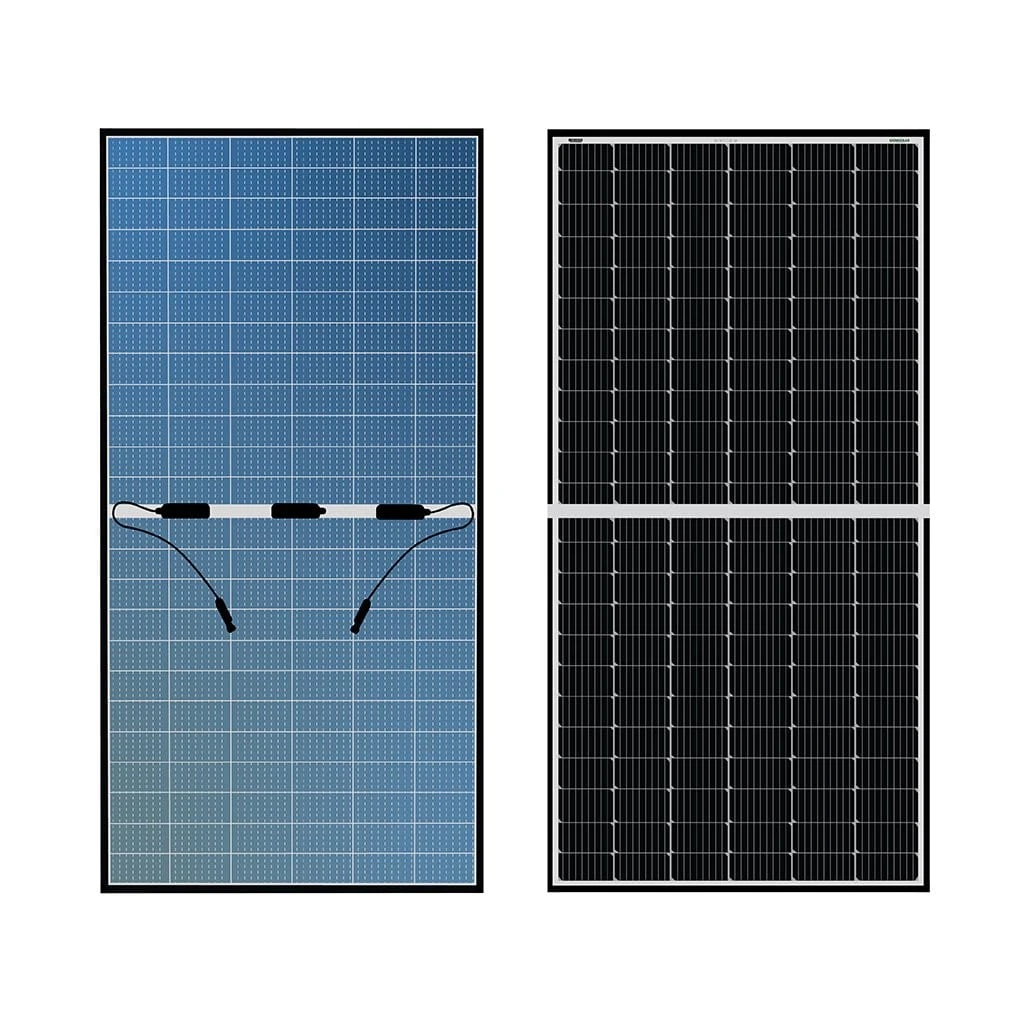
Bifacial solar panels are designed to generate electricity from both the front and rear sides of the module. Unlike traditional monofacial panels that capture sunlight only from one side, bifacial panels utilize reflected sunlight from surfaces such as rooftops, concrete floors, sand, gravel, or painted areas. This reflected light, known as albedo, helps increase overall energy generation.
Bifacial panels are usually constructed with dual-glass (glass-glass) architecture, making them more durable and resistant to environmental stress. Under suitable installation conditions, these panels can deliver 10% to 30% higher energy output than standard modules.
Half-cut solar panels are manufactured by cutting traditional solar cells into two equal halves. This design reduces the electrical current flowing through each cell, minimizing resistive losses and heat generation. As a result, half-cut panels provide:
Half-cut technology has become a standard feature in modern high-efficiency solar modules, making it suitable for residential, commercial, and utility-scale projects.
| Brand | Typical Panel Type | Efficiency Range | Estimated Price Range | Warranty | Key Features |
|---|---|---|---|---|---|
| Maxeon (SunPower) | IBC / Premium Monocrystalline | ~22.8%+ | High | 25 yr product & performance | Industry-leading efficiency, strong low-light performance, long life |
| REC Group | N-type TOPCon / Half-Cut | ~21.9-22.6% | Mid-High | 25 yr product / performance | Excellent value + performance balance |
| Longi Solar | Monocrystalline / Half-Cut | ~21.2-23.6% | Mid-Premium | 25 yr all warranties | High efficiency + global utility adoption |
| Jinko Solar | Mono / Half-Cut / TOPCon | ~22.5% | Mid-Premium | 25 yr | Large-scale utility usage, strong bankability |
| Trina Solar | Mono / Bifacial | ~22.8% | Mid-Premium | 25 yr | Strong global performance and reliability |
| Canadian Solar | Mono / TOPCon | ~21.4-22.8% | Mid-Range | 25 yr | Good balance of cost & performance |
| Waaree Energies | Mono / Bifacial | ~19-21.5% | ₹30 – ₹58 /W approx | 25 yr | Leading Indian manufacturer with wide options |
| Adani Solar | Mono / Bifacial | ~19-21% | ₹26 – ₹57 /W approx | 25 yr | India-focused brand with broad portfolio |
| Loom Solar | Monocrystalline | ~20-21.5% | ₹32 – ₹60 /W approx | 25 yr | Popular residential choice |
| IB Solar | Mono PERC / Half-Cut | ~20-21% | ₹35 – ₹40 K per panel | 25 yr | Value choice with strong local support |
The Above Prices are approximate values - for real and the latest prices, please connect us today.
When bifacial technology is combined with half-cut cell design, the result is a high-performance solar panel with superior energy yield, enhanced reliability, and longer service life. Many modern panels also integrate advanced cell technologies such as TOPCon or HJT, further improving efficiency and degradation rates.
Bifacial panels benefit from rear-side light absorption, while half-cut cells reduce energy losses. Together, they significantly increase total electricity generation over the panel’s lifespan.
Glass-glass bifacial panels provide superior protection against moisture, UV exposure, and mechanical stress. Half-cut cells reduce thermal stress and cracking, ensuring stable performance for 25 years or more.
These panels perform better in partial shading, high temperatures, and dusty or humid environments. This makes them ideal for diverse climatic conditions, especially in regions with strong sunlight and high ambient temperatures.
Although bifacial and half-cut panels may have a slightly higher upfront cost, their increased energy output and long lifespan result in lower cost per unit of electricity over time, making them economically attractive for large solar investments.
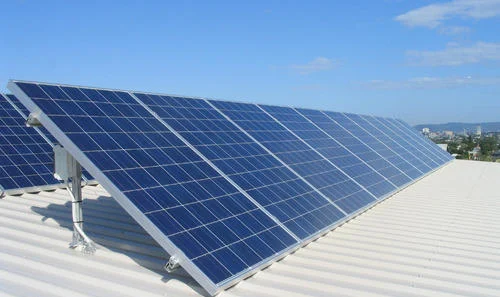
For residential and commercial rooftops, space efficiency and performance are critical. High-efficiency half-cut panels are particularly beneficial where roof area is limited. Bifacial panels can provide additional gains on rooftops with reflective surfaces or elevated mounting structures.
Best suited for:
Utility-scale solar plants and large commercial installations benefit greatly from bifacial and high-wattage half-cut panels. When installed on elevated structures or solar trackers, bifacial modules maximize rear-side energy capture, significantly boosting total plant output.
Best suited for:
| Criteria | Rooftop Projects | Large Solar Projects |
|---|---|---|
| Available space | Limited | Ample |
| Preferred efficiency | High | Moderate to high |
| Panel wattage | 400–550 W | 550–700 W+ |
| Bifacial advantage | Moderate | High |
| Mounting type | Flush or elevated | Elevated or tracker-based |
These panels offer excellent efficiency, low degradation, and strong performance warranties. They are suitable for both commercial rooftops and large ground-mounted projects.
A balanced option combining affordability with reliable performance, suitable for varied climatic conditions and mid-scale installations.
Designed for utility-scale projects, these panels deliver extremely high power output and are ideal for minimizing balance-of-system costs.
These panels are widely used in residential and commercial rooftops due to their efficiency, durability, and consistent field performance.
Using light-colored or reflective surfaces beneath panels enhances rear-side energy generation for bifacial modules.
Elevated mounting structures allow better airflow and improved rear-side light exposure.
Choose panels with long-term product warranties (10–15 years) and performance warranties of 25 years or more.
| Feature | Bifacial Panels | Monofacial Panels |
|---|---|---|
| Power generation | Front + rear | Front only |
| Efficiency | Higher | Standard |
| Durability | High (glass-glass) | Moderate |
| Cost | Slightly higher | Lower |
| Best use | Large projects & reflective rooftops | Standard rooftops |
Bifacial and half-cut solar PV panels represent the future of solar energy generation. Their ability to produce more power, withstand harsh conditions, and deliver long-term financial benefits makes them an ideal choice for both rooftop installations and large solar projects. As solar technology continues to evolve, investing in these advanced panels ensures maximum energy output, sustainability, and return on investment for years to come.